
SPINE TUMORS
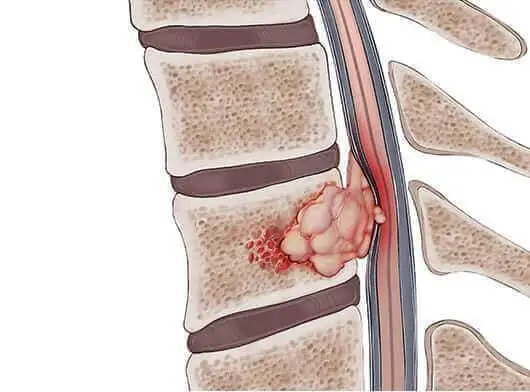
Spine cancers
Spinal cancers are tumors that arise in the bones or nerves or other soft tissues that make up the spine and spinal cord. Tumors can originate from two sources. Primary tumors arise from the cells that make up the structure of the spine and spinal cord. Metastatic tumors are tumors that develop in other parts of the body (breast, prostate, lung, etc.) and spread to the spine. Metastatic tumors are most common in men between the ages of 45 and 65.
What are the symptoms of spine cancers?
Spine and spinal cord tumors are symptomatic depending on their location. The most common complaint is back pain. The pain is worse at night and usually does not go away with rest. Symptoms of chronic diseases such as fever, weight loss and weakness may occur. If the tumor is in the neck and there is compression due to the tumor, loss of strength and numbness in both arms and legs may be observed. If the tumor is located in the back and waist region, symptoms such as weakness, numbness and inability to walk may occur only in the legs. Depending on the location of the tumor, urinary incontinence, inability to control stool, loss of sexual function, impaired reflexes, near-total numbness and bed dependency may occur. In children, clumsiness, weakness and loss of strength in the form of falling attacks are common. Another complaint in children is the curvature of the spine called scoliosis.
How is it diagnosed?
Anamnesis and physical examination by specialized physicians is the first step in diagnosis. Patients may have a history of previous cancer or a history of cancer under treatment. In the second stage, imaging methods such as direct radiography, CT and MRI, scintigraphy or PET scans can be performed to determine the diagnosis and the spread of the tumor. If a tumor is detected by imaging methods, a biopsy is necessary to determine its type and origin. Depending on the location of the tumor, a biopsy can be performed under local anesthesia with various imaging methods such as CT or USG, or an open biopsy can be performed under general anesthesia.
What is the treatment for spine cancers?
Depending on the tumor type and location, methods such as surgical intervention, radiotherapy, chemotherapy, immunotherapy can be used alone or in combination. In some patients, follow-up may be chosen. Spinal surgeons, radiology and oncology specialists should work together in this decision-making process. Benign tumors that do not show any signs of compression can be monitored regularly. Surgical removal of tumors, especially those that cause neurological symptoms or have caused or are at risk of causing fractures, will be appropriate. Options such as radiotherapy, chemotherapy and immunotherapy can also be used before or after surgical treatment depending on the tumor type.