
ENDOSCOPIC DISC SURGERY
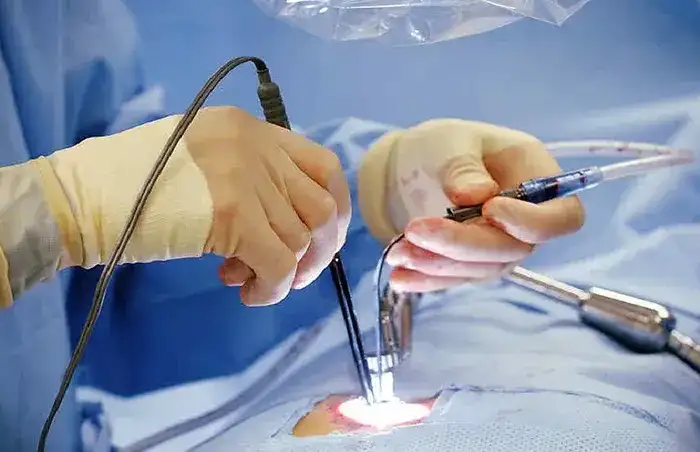
It is also known as closed surgery among the people. Basically, it is the use of a camera instead of a microscope in surgery;
⦁ There are different systems using the camera. However, the most advanced system today is the Full-endoscopic system.
⦁ 8 mm cannula and approximately 6 mm endoscope systems and specially developed instruments are used.
Which patients can the Full Endoscopic Method be applied to?
⦁ It can be applied in all kinds of herniated discs.
Full Endoscopic method:
It can be applied in 2 ways depending on the patient’s spine structure and the condition of the hernia.
⦁ Interlaminar to the method performed in the middle of the patient’s waist
⦁ The method performed from the side of the waist is called transforaminal.
TRANSFORAMINAL :
⦁ Holes called foramen, where the nerves exit the spine, are used as entry points.
⦁ Since no anatomical structure is damaged during the operation, it is the most ideal method in herniated disc surgeries.
⦁ However, the structure of the hip bone or the location of the hernia in the spine prevents the use of this method. In these cases, the interlaminar method is chosen.
INTERLAMINAR:
⦁ It is our preferred route in patients who cannot be performed with the transforaminal method.
⦁ The entry site is between the bones called laminae located behind the spine.
⦁ It is necessary to drill a small hole in the structure between the laminae, called the Flavum.
⦁ It is usually not necessary to remove bone tissue during surgery.
⦁ Very little damage to normal tissue compared to microsurgery or other methods.
Advantages of full endoscopic herniated disc surgery?
Small skin incision is made.
⦁ Normal tissues are less damaged during surgery compared to other methods.
⦁ There is less adhesion around the nerves after surgery;
⦁ It can be applied more easily than other methods in obese patients.
⦁ Since muscle pain due to surgery is not felt after surgery, there is less need to use painkillers.
⦁ There is a faster recovery after surgery and the possibility to return to normal life in a shorter time compared to other methods.
Which type of anesthesia is used?
⦁ General anesthesia is used.
⦁ The operation usually takes around 15 minutes. The short operation time minimizes the risks of general anesthesia.
How long is the hospitalization period?
⦁ It usually does not require hospitalization. We have the opportunity to discharge our patients on the same day. However, patients with additional problems (heart, chronic diseases, etc.) we hospitalize our patients for 1 night.
Is there a chance of hernia recurrence after full endoscopic herniated disc surgery?
⦁ The recurrence rate is around 10% according to scientific studies conducted by us and around the world.
⦁ This ratio is the same for the other methods;
⦁ However, in case of recurrence of hernia in patients operated with the Full Endoscopic method, the 2nd operation will be easier as there will be less adhesions compared to other methods.
Can it be applied to patients who have been operated on with other methods before?
⦁ It can also be safely applied in patients who have previously undergone microsurgery or classical open surgery.
⦁ However, such operations should be performed by surgeons experienced in Full Endoscopic Surgery.
Can it also be applied in case of spinal canal stenosis?
⦁ Special instruments can be used to open stenosis in the spinal canal using the full endoscopic method.